
I have been taking advantage of a rare warm and sunny spring day to get into the garden to do some much-needed tidying. As an organic gardener I spend a lot of time digging up weeds. It's actually quite therapeutic! This year the buttercups are doing fantastically well. Buttercups are one of those weeds/wild flowers which are quite nostalgic because as children in the UK they are one of the first flowers to learn and to wonder at with their incredible yellow flower. As an adult the attitude changes as many regard them as pernicious weeds. Spode produced a pattern called
I normally use a plastic pot that is just big enough to hold the roots of the plant, and has plenty of drainage holes. I always place my dendrobium nobile orchids into an outer decorative pot to add to the aesthetics when they are on display and to add weight to.
| 1983 catalogue page |
- Virginia Tech Dendrology is THE source for tree identification.
- Buttercups belong to the Ranunculus genus, which contains approximately 400 species. Despite the variations, they carry many of the same characteristics. For most varieties, buttercups have slightly curving yellow petals with a waxy coating. This waxy coating comes from reflective cells just below the petal surface.
- THE RUG DEPARTMENT The Rug Department is HD Buttercup’s globe-trotting in-house brand. Working closely with rug specialists & collectors from far and wide, we collect rare and specialty rugs with our diverse range of customers’ needs in mind. Encompassing a range of styles and materials, our rugs are individually unique and of premium quality.
| Example of a backstamp used to about 1957 |
Also in 1896 a differently coloured versionappeared with pattern number 2/4191 and called Mandalay.This was in reds and browns. However thebest known version has pattern number 2/7873 and was first recorded in 1924 remaining in production until 1992. Many customers who wanted to add to their services asked for its reintroduction and this finally happened in 2000 but sadly was not the success it was expected to be.
| Example of a backstamp used after 1970 |
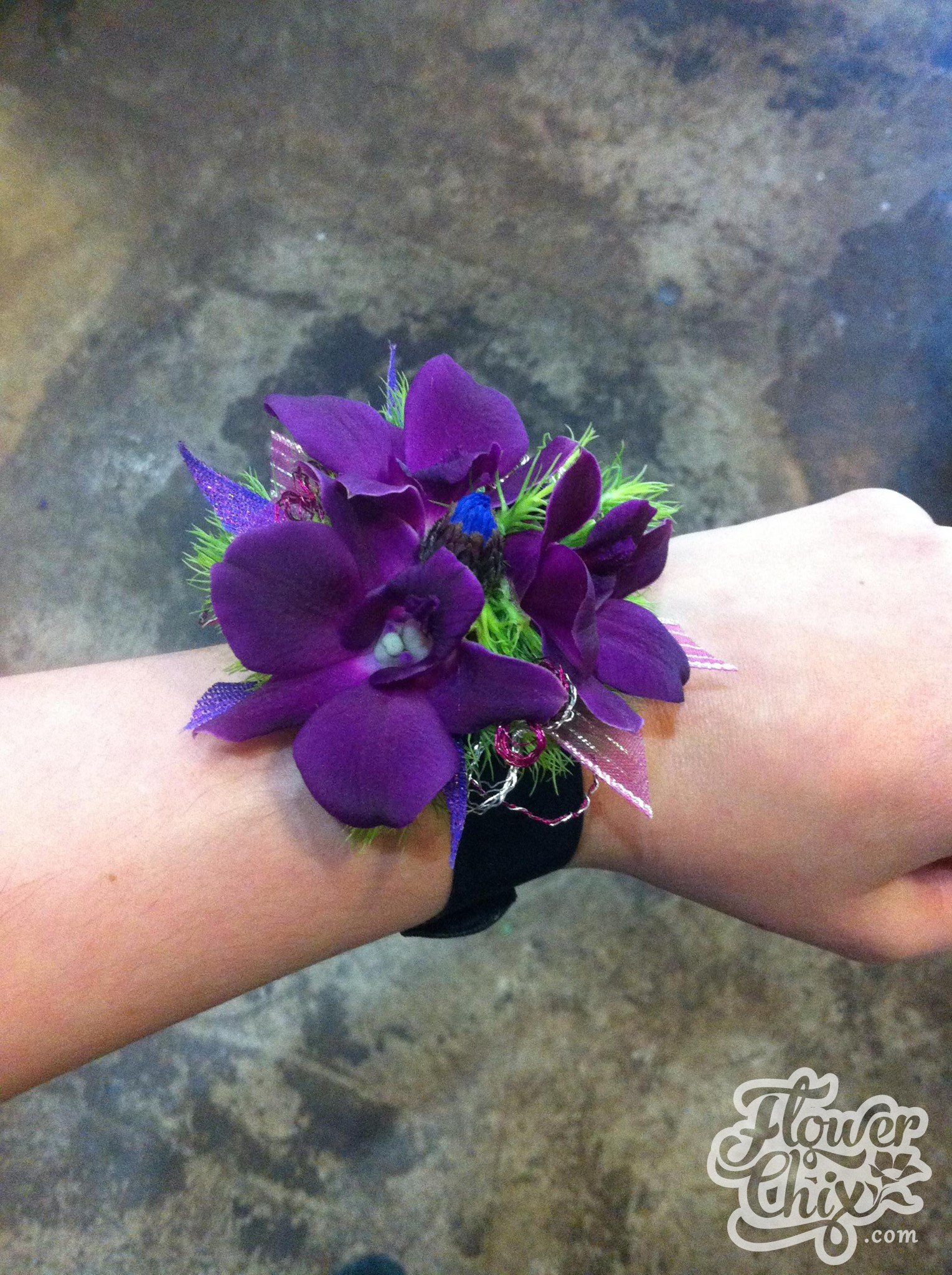
Dendrobium Buttercup

| 1962 German catalogue Buttercup left and Cowslip right |
*Abraham is sometimes wrongly called Abrahams (including by me and Robert Copeland!). I am almost certain now it is without the S. I have also seen the name Francis Xavier Abraham and think this may be the same person; and in the Spode archive in a document, dated 1895, a signature Frank X. Abraham. If I can discover who is who I will add to this blog...
Following on yesterday’s posting on agapanthus (roughly ‘flower of love’), here are a few more plants of love. Five plants that I grew back in Columbus.
First, two genuses of plants with the Greek ‘love’ root phil- in their scientific names: Philodendron and Philadelphus.
Dendro Butter Cups
From OED3 (June 2011) on philodendron:
[etymology] < scientific Latin Philodendron, genus name (H. W. Schott 1829, in Wien. Zeitschr. 3 780) < Hellenistic Greek ϕιλόδενδρον, neuter of ϕιλόδενδρος fond of trees ( < ancient Greek ϕιλο– philo- comb. form + δένδρον tree: see dendro-comb. form), in reference to the epiphytic habit of most members of the genus.
[definition] A genus of tropical American evergreen plants (family Araceae), chiefly lianas, some species and hybrids of which are cultivated as house plants
Philodendron serves as the common name of the plants. Here’s a classic house plant species:
and a climbing Philodendron lacerum:
From OED3 (Dec. 2005) on philadelphus:
[etymology] < scientific Latin Philadelphus, genus name (Linnaeus Species Plantarum (1753) I. 470) < post-classical Latin philadelphus (C. Bauhin Πιναξ Theatri Botanici (1623) 398) < ancient Greek ϕιλάδελϕος loving one’s brother (see philadelphianadj.1 and n.1), in Hellenistic Greek also used as a plant name.
[definition] A genus of the family Hydrangeaceae, comprising chiefly deciduous shrubs with fragrant white or cream flowers, native to north temperate zones; … any plant of this genus, esp. the popular garden shrub P. coronarius and its numerous cultivars and hybrids. Also called mock orange, syringa.
No account of why the plant came to be the flower of brotherly love in Hellenistic Greek.

Here’s a photo of the species P. lewisii in bloom:
Dendro Butter Cupcake
Now on to three plants with love in one of their common names: love-in-a-mist (Nigella damascena), lad’s love (Artemisia abrotanum), and love lies bleeding (Amaranthus caudatus).
From the Wikipedia entry for Nigella damascena:
Nigella damascena (Love-in-a-mist) is an annual garden flowering plant, belonging to the buttercup family (Ranunculaceae).
It is native to southern Europe (but adventive in more northern countries of Europe), north Africa and southwest Asia. It is also commonly grown in gardens in North America. It is found on neglected, damp patches of land.
The plant’s common name comes from the flower being nestled in a ring of multifid, lacy bracts. It’s also sometimes called Devil-in-the-Bush.
(Multifid in OED3: ‘Divided into several or many parts by deep clefts or notches’.)
So the flowers are symbols of female genitals. A photo:
The plant self-sows freely, comes in a variety of colors, and cross-breeds easily.
From the Wikipedia entry for southernwood:
Southernwood (Artemisia abrotanum) is a flowering plant. Found in Europe, the genus Artemisia was named for the goddess Artemis. Southernwood is known by many other names including Old Man, Boy’s Love, Oldman Wormwood, Lover’s Plant, Appleringie, Garderobe, Our Lord’s Wood, Maid’s Ruin, Garden Sagebrush, European Sage, Lad’s Love, Southern Wormwood, Sitherwood and Lemon Plant.
… The Romans believed it protected men from impotence. It is also said that young men in areas like Spain and Italy rubbed fresh southernwood leaves (which were lemon-scented) on their faces to promote the growth of a beard.
In rural areas, where southernwood was known as Lad’s Love and Maid’s Ruin, the herb acquired a reputation for increasing young men’s virility. It was popularly employed in love potions and adolescent boys rubbed an ointment on their cheeks to speed up the growth of facial hair. It is associated with sexual appeal and has been used by males to increase their virility. Southernwood was put under mattresses in Ancient Greece and Ancient Rome to rouse lust in their occupants. Its common nickname, Lad’s Love, refers to the habit of including a spray of the plant in country bouquets presented by lovers to their lasses in order to seduce them. It was used in medieval times.
It’s a wonderful scent herb, with an interesting texture in the garden (even if it doesn’t have the sexual powers once attributed to it). A photo (taken by Elizabeth Daingerfield Zwicky) from my Columbus garden:
Dendro Butter Cupcakes
Finally, love lies bleeding. From the Wikipedia entry:
Amaranthus caudatus is a species of annual flowering plant. It goes by common names such as love-lies-bleeding, love-lies-a’bleeding, pendant amaranth, tassel flower, velvet flower, foxtail amaranth, and quelite.
Dendro Butter Cups
The amaranths supply seeds that can be ground into a flour and also dyes.
In a photo:
A decidedly phallic plant.