
(redirected from burr buttercup)
Bur Buttercup Ranunculus testiculatus. Bur buttercup is a county declared weed in Converse county in Wyoming. Photo by Richard Old, XID Services, Inc., Bugwood.org. Bur Buttercup is not listed on the regulated or unregulated invasive plants in BC. You can see a list of invasive BC plant species here. Two more pictures taken by Rick Howie in 2017. This “stand” of Bur Buttercups is on East Shuswap Road. The flowers of Bur Buttercup are probably cross-pollinated by small bees and flies. Aphids, sawfly larvae, and other insects are known to feed on buttercups, but these are mostly wetland and woodland species. The seedheads may provide a source of food to Ring-Necked Pheasants, Wild.
Also found in: Dictionary, Thesaurus, Encyclopedia.bur
[ber]bur
(ber), This spelling is preferred to burr.burr
A drill bit used to cut hard tissues (e.g., enamel, bone) in dentistry or orthopaedics.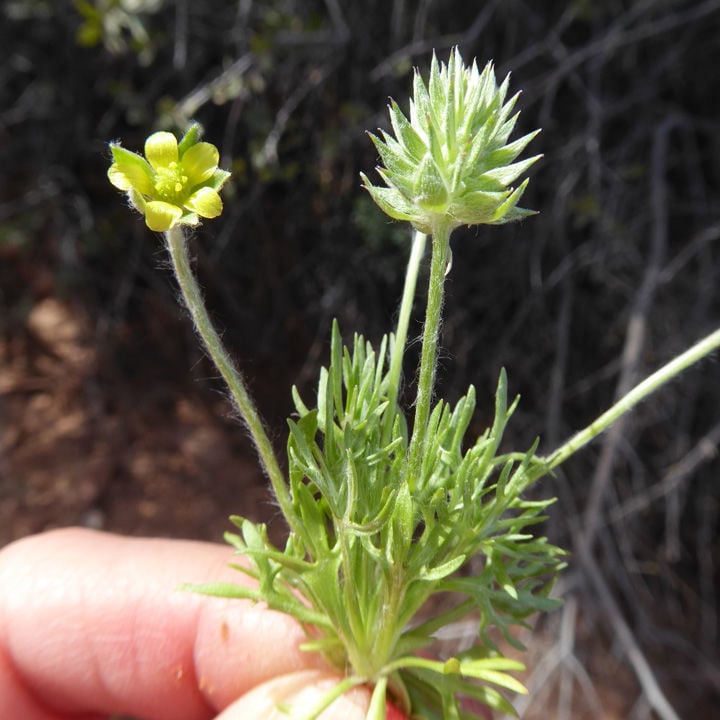
burr
A drill bit used to cut hard tissues–enamel, bone in dentistry or orthopaedicsbur
( bŭr)
bŭr) Want to thank TFD for its existence? Tell a friend about us, add a link to this page, or visit the webmaster's page for free fun content.
Link to this page:
Ranunculus testiculatus
Bur buttercup (Bonnie Million, National Park Service, Bugwood.org)
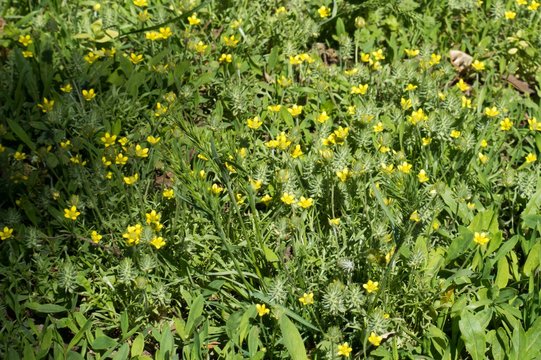
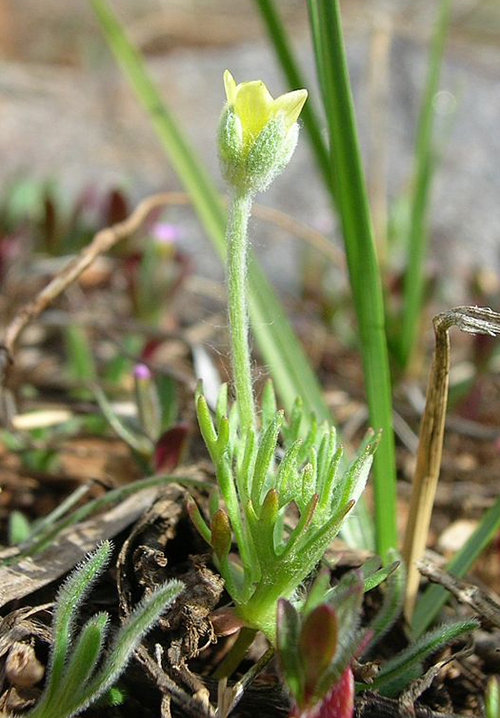
Bur buttercup lateral habit (USDA Forest Service, Wikimedia Commons)
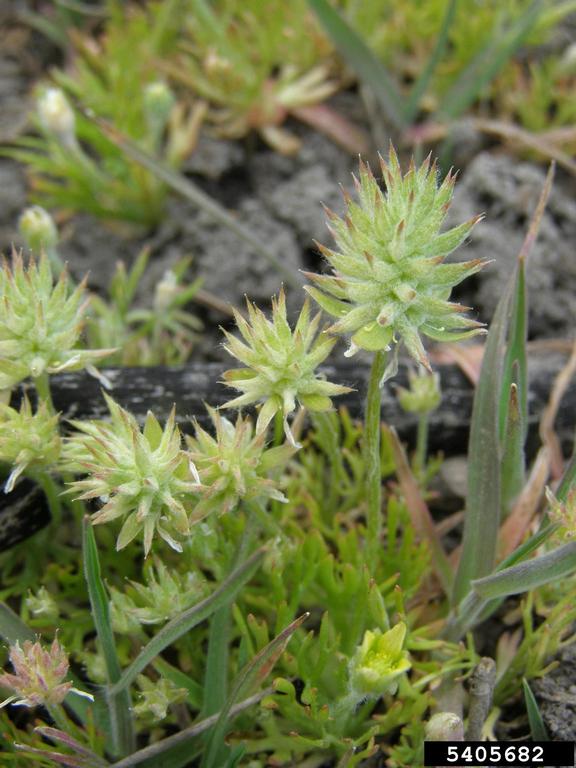
Bur buttercup fruit (Curtis Clark, Wikimedia Commons)
Description
- low-growing plant with light green, antler-looking leaves covered with white hairs
- small bright yellow flowers are singly produced on the tips of leafless stalks which grow taller than the leaves
- five petal flowers are succeeded by oval-shaped, spiny burs; each bur produces 5 to 80 seeds
- summer annual with germination in early spring when temperatures reach 41°F
Location
- commonly grows in planting beds and lawn areas
Burr Buttercup
Life Cycle
Burr Buttercup Picture
- flowers are produced within 3 weeks of germination followed by burs
- plant foliage dries, turns brown and becomes brittle by early summer
IPM Recommendations
Burr Buttercup Picture
- Hand-pull plants in planting beds prior to seed maturation.
- Shallow tillage or hoeing will control young plants in planting beds.
- Apply a mulch layer 3 inches deep on planting beds to reduce seed germination.
- Apply an appropriate post-emergent broadleaf herbicide directly to target weeds.